

Pangolin, p.1
Pangolin, page 1


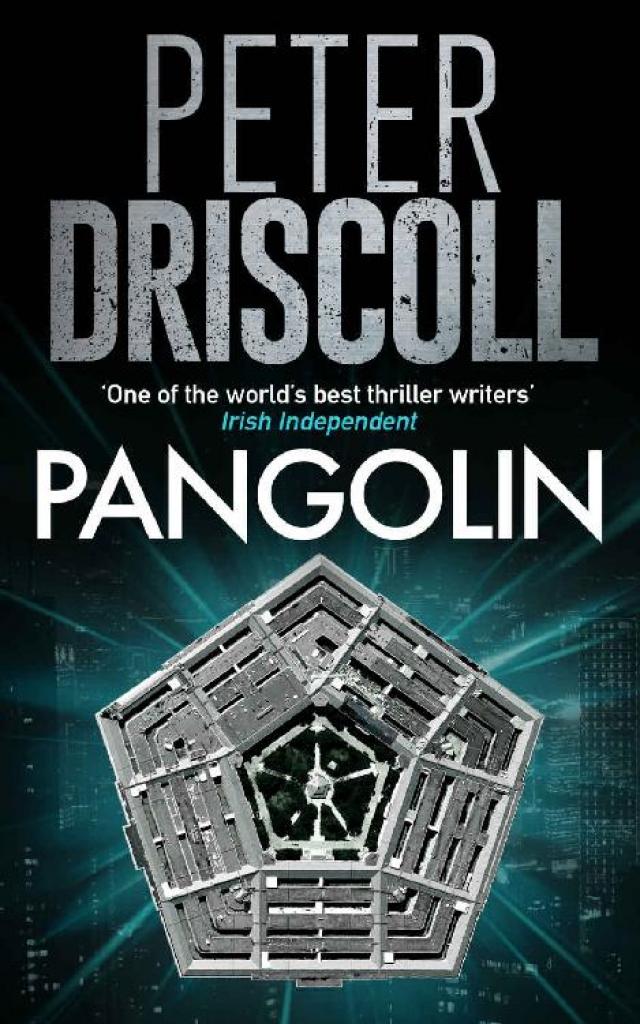
PANGOLIN
Peter Driscoll
Silvertail Books ♦ London
Outline of a Memorandum on the Project
Objectives: To abduct an employee of the United States Government, code-named Pangolin. To hold him prisoner until the ransom demanded of his employers has been paid.
Personnel required: Four.
Procedure: See Memorandum attached.
Observations: Kidnapping is generally an unsuccessful crime because it has two inherent weaknesses:
At some stage the kidnapper must expose himself in order to collect the ransom;
Unless he is executed, the victim can usually identify the kidnapper after release.
In this Project, no rendezvous will be necessary; and Pangolin will never know who his abductors were.
Budgeted expenditure: Twelve thousand dollars, (Hong Kong).
Anticipated profits: Ten million dollars (U.S.).
Prologue
The March morning was cloudy and cool, but with a hint of the soggy humidity of summer already in the air, dampening Kao Ling’s shirt under the armpits as he walked up the steep incline of the Wanchai Gap Road. At this point it was no more than a narrow paved footpath running straight up the side of Victoria Peak, leaving the traffic and crowds and noise of Wanchai far below. To the right there was low forest, dense and impenetrable. On the left, squatter shacks had been built in the gully beside the road, flimsy tiers of planking and tin that looked likely to be swept away by the next typhoon.
He was growing short of breath but he went on climbing at the same steady pace until, well above the squatter camp, he reached the intersection with Bowen Road. Another footpath pretending to be a road, this, but running level across the hillside and giving a sweeping view of the harbour, the concrete slabs of Kowloon on the other side and, almost lost in haze, the distant purple mountains of China. Panting, feeling his face lightly filmed with sweat, Kao Ling rested for a minute. He ignored the view and stared back along the deserted footpath, clearly visible all the way down to where it met up with Kennedy Road. No one could have followed him up there without making himself obvious. He had no reason to believe he had been followed, but it was as well to be sure.
When he had recovered his breath he set off along Bowen Road to the west. On this weekday morning he had the path to himself. He rounded a bend and the skyscrapers of Central District came into view—a spectacular sight, if not exactly beautiful. Now he could see, too, the place where Bowen Road ceased to be a footpath and actually became a road. There was a viewing point here, a clearing that backed on to a hollow in the hillside, with benches scattered round it and a few parking spaces, only one of which was taken.
The car was a pale green Plymouth. Two men sat in it, a Chinese chauffeur in the front and a Westerner in the rear, watching him approach. Kao Ling got a fleeting impression of ginger-blond hair edged with grey, blue eyes, a tawny complexion. He stopped in the centre of the clearing and turned to stare out across the deep blue of the harbour. A hundred junks and lighters and sampans and ferryboats plied across it, all seemingly set on collision courses. He stood there for a minute while the men in the car took stock of him. Then he heard a door open and footsteps approaching, steel-tipped heels crunching the gravel. They stopped behind him and slightly to his left. A lighter snapped. Kao smelt the smoke of a toasted cigarette.
He took a deep breath. ‘A remarkable view,’ he said. ‘They say it is one of the world’s greatest sights.’
‘Personally,’ said the American, ‘I think San Francisco Bay has the edge.’
‘I wouldn’t know about that.’
There was an awkward silence, as if, with the artificial preliminaries out of the way, they were searching for a real opening to the conversation. Both of them were nervous.
Finally Kao said, ‘You are the one to whom he addressed the letter?’
‘Yes.’
‘You were supposed to come alone.’
‘That wasn’t possible. Benjy is only my driver; he’s paid not to be interested.’
‘All the same—’
‘Listen,’ the American snapped, ‘I’ve broken enough of my own rules coming up here, meeting you like this.’ He paused. ‘Who are you, anyway?’
‘My name is Kao Ling.’
‘Ah.’ Recognition came into the American’s tone. ‘New China News Agency, right?’
‘I work in the bureau here.’
‘But what are you to him?'
‘A friend.’
‘A good one?’
‘Taking such a risk for him, I would hope so.’ Kao Ling suddenly felt exposed and vulnerable, the protection of anonymity stripped away. He turned to face the American. ‘Let us walk a little way, please.’
The other man drew on his cigarette, thinking about that, and then nodded. Close to, his appearance was rather boyish: smooth tanned skin and clear blue eyes belying the grey hairs and the weight of his influence. An android, Ch’ien had once called him, a man who took decisions without reference to human feelings, with the indecent detachment of a computer calculating megadeaths. A powerful and well-protected android, all the same.
They turned together and began to stroll along the footpath, back in the direction Kao had come from. The chauffeur, who was clearly also a bodyguard, got out of the car and followed them at a discreet distance.
‘I gathered you smuggled the letter out of Peking and posted it here in Hong Kong. It was addressed to me in person. Why?’
‘Because he knew you. He trusts your discretion. He wants to deal with you personally.’
‘That would be very irregular. How did he know I was stationed here, anyway?’
‘As an alternate member of the Party’s Central Committee he sees intelligence reports, I imagine. Your presence here would hardly have escaped the notice of our secret service.’
‘The letter was subjected to analysis, naturally. The hand-writing compares well with the samples we have on file. However
He was good at this, Kao thought. He would state his reservations obliquely, keeping face for both of them.
‘I’m sure you’ll understand how hard it is for us to accept this for what it appears to be. To start with, we must ask ourselves whether it is a forgery. And if we decide that it is not, we must ask whether it was written under duress.’
‘I was with him when he wrote it,’ Kao said simply. ‘There was no coercion.’
The American gave a polite nod. ‘Then there is the question of motives—his own, and perhaps other people’s.’ He was choosing his words carefully. ‘The biggest question of all is: Why? A man using you as a courier sends a message to us. This man is not only your country’s leading expert in his field but a member of the Central Committee, and he wants to come over to us. Why, Mr Kao?’
‘He lived in your country once,’ Kao said. ‘This is part of the reason.’
‘He was hounded out of it by the McCarthyites.’
‘He does not believe that era will be repeated. He has faith in the present generation. He remembers you, as a young officer assigned to his case, telling him things would soon get better, trying to persuade him to stay. He admires you for your foresight.’
If the American felt flattered he showed nothing. ‘My motives were simple,’ he said. ‘I would rather have had him designing rockets at Pasadena than Lop Nor.’
‘His background is part of the trouble. Because of the years he spent away, he had never been fully trusted. He brought barbarian ways back with him. We can be a xenophobic people, you know.’ Kao Ling allowed himself a small smile. ‘But his fears are more fundamental. He has always been a moderate—too moderate for the radicals who may well regain control of the Party soon. He will lose his seat on the Committee and perhaps disappear from public view. Political oblivion can easily lead to total oblivion. He fears, frankly, for his life.’
‘A man that valuable? That’s preposterous!’
‘During the Cultural Revolution,’ Kao said mildly, ‘a man named Liu Shih-kun, one of the country’s most talented pianists, was seized by the Red Guards. They objected to his playing bourgeois music. They broke his fingers one by one. He has been unable to play since. That was preposterous, but it happened. Political line is everything.’
They walked on for a minute without speaking. Beside the path, mynah birds chuckled and squabbled over the contents of litter bins. The man in the chauffeur’s uniform kept twenty yards behind.
‘What does he expect of us?’ the American asked at last.
‘Asylum. He is watched. He must choose the time and place of departure for himself. It may be a year, even two years, before the opportunity comes. Meanwhile he wants an assurance that he will be welcomed.’
‘How can we contact him?’
‘Only through me. I am in Peking once every month.’
The American stopped walking and faced the other man squarely. ‘Mr Kao, I do not like to say this. In this trade it is too easy to believe the things that we want to believe, and there are always people eager to tell us such things. We learn to be sceptical. When someone offers me the defection of Ch’ien Hsueshen, the head of the Chinese missile programme, then I have to be very sceptical indeed.’
‘Perhaps,’ said Kao with dignity, ‘others might be less so.’
‘The Soviets? The British? I doubt it. I am willing to believe, Mr Kao, and you say Ch’ien is willing to trust me. Have him send me proof.’
‘What proof?’
‘Something more than a letter. Something whose authenticity we can check. Information.â €™ The American watched Kao carefully. ‘Information connected, shall we say, with his work.’
Kao felt a thrill of apprehension. ‘You are asking him to commit espionage?’
‘If he crosses over he’ll be doing that anyway. That’s always the bargain—asylum in exchange for information. He will have to give us everything. Where is the difference in giving a small part now?’
‘He will not agree,’ Kao said. ‘His loyalty may not be to the Party, but it is to China.’
‘And yours, Mr Kao?’
‘Something of the same.’
‘Yet you would help him get out?’
‘Because he is a friend,’ Kao said vehemently.
The American offered him his pack of Lucky Strikes. Kao shook his head. The American lit one for himself. ‘You took a risk bringing that letter out, another risk meeting me here. Obviously you thought they were worth taking, for his sake. The risk would be no greater if, next time you went to Peking, you brought back some documents. Something of his choice, anything he could copy without undue risk. I could arrange a safe means of delivery. It would not be necessary for you to see me again.’
Kao stared at him in horror. ‘It is out of the question.’
‘I must have that proof.’
‘Then you must get it another way.’
‘I can’t force you,’ the American said. ‘But if the only access to Ch’ien is through you . . . can’t I ask you to think it over?’
‘It is no use. I refuse absolutely.’
‘There is no other way, Mr Kao. At least speak to him. Put my suggestions to him.’
Kao swung away and began to walk again. The American sidled along a few paces behind. Within a minute they had reached the junction of the Wanchai Gap Road, where Kao stopped, glanced down the pathway and faced the American again.
‘I shall speak to him, nothing more. I shall give his answer to you next month. To you personally; it is out of the question that I deal with anyone else.’
He turned away and began to walk down the path. ‘Wait!’ the American called.
He had taken out a small notebook and was scribbling in it. He tore out the sheet and handed it to the Chinese.
‘Call me when you’re ready, but not through the consulate switchboard. That’s a secure number, unlisted, unbugged. Memorize it and destroy the paper. And by the way, don’t use my real name. Ask for Pangolin.’
Part One
1
The Project was born on the day of the picnic; of that there was never any doubt. But its conception, so to speak, had occurred through one of those coincidences that can later be seen to have set a whole train of events in motion. Two things happened to Alan Pritchard on Tuesday, the twenty-fifth of July: he received a fateful summons to the office of the general manager of the Cathay Star, and he bumped into Ailsa.
It was one of the regrets of Pritchard’s life that he had not, all that time ago, plucked up the courage to kill off his failing marriage and make an honest woman of Ailsa. Things might have been different for him if he had. There had never seemed any likelihood that they would meet up again, but there it was—six years later, a thousand miles from Saigon, he found himself staring at her across the lobby of the Mandarin Hotel.
The beginning had been earlier. He had arrived at work, as usual, at seven forty that morning. The Star had its premises in Kennedy Town, two miles and a far cry from the smart modern office blocks of Central District. Here, in one of the oldest parts of Hong Kong, the buildings were lowlier and shabbier, and the dark shopfronts of herbalists and pawnbrokers, jade dealers and snake merchants, lurked in shadow along the colonnaded sidewalks. Tourists thought it picturesque; to Pritchard it sometimes brought an unsettling sense of alienation. Take away the taxis and the neon signs and you might have been in one of the old China Treaty Ports in the days before the gwai-los, the foreign devils, had made their presence felt.
Kennedy Town and the Cathay Star suited each other. It was the oldest of Hong Kong’s English-language newspapers. Once an influential voice in the colony’s affairs—in the 1890s it had campaigned against the abolition of the opium trade—it had been running at a loss for several years now, and rumours of imminent closure surfaced from time to time. Even the takeover from its old European management by a powerful Chinese publishing syndicate, ruthless in their cost-cutting, had failed to stop the slide. In the Quill Club they said, privately and sometimes not so privately, that you couldn’t do much worse than work for the Star. Pritchard never took up the argument. They probably said that he and the Star suited each other too, a pair of old Far East hands looking grumblingly back on better days.
The building was an uninspiring place to work, a four-storeyed tenement converted into what was basically a factory. There was little concession to its partial role as an office block and none at all to style. The front door opened into a tiny lobby; straight through from there was the machine room. Up a flight of stairs was a combined switchboard and reception desk, where a sullen Cantonese girl spent most of her day painting her fingernails with green varnish. Beyond that were the editorial offices, small, cramped and awkwardly partitioned with dark wood and glass, like cubicles in a Victorian public house.
Pritchard went through the newsroom to the sub-editors’ office. Corless, the new young chief sub, was in already, frowning over a dummy page layout. He’d been through the over-night agency tapes and there was a pile of stories in his basket. Pritchard said hello and Corless looked significantly at his watch. This had happened most mornings lately, ever since a month ago when Corless, exercising a precarious authority over a man nearly twice his age, had reprimanded him for coming in late. For the sake of his self-respect, Pritchard had taken to arriving ten minutes late every morning. Corless had never quite plucked up the courage to reproach him again, but always made his displeasure known. It was a small test of wills that usually got the day off to a bad start.
‘Take this Filipino kidnapping story first, would you, Alan? We may have to lead the first edition with it if nothing better turns up.’
Deliberately, Pritchard took off his jacket, hung it over the back of his chair and rolled up his sleeves before approaching the desk to collect the story. Then he started work.
Six days a week for almost three years, his job had been the same. He would work for nine and a half hours, with a break for lunch and a couple of beers at a cooked-food stall round the corner. He would cut and rewrite copy, mark it up for the type setter, and compose headlines. For a man of his experience it was mind-bending work; one day, he thought, someone would invent a machine that did it more efficiently. He spent much of his time looking forward to the high point of the day, at five o’clock, when the final edition of the Star had been put to bed and he would catch a tram to the Quill for his first drink of the evening.
His day was entirely predictable and rarely varied. He was surprised, then, five minutes after his arrival, when the switchboard girl came in and accosted him.
‘Mr So want to see you.’
‘Mr So? You mean now?’
‘Now. Right now,’ she said with a hint of indignation, as though no summons from Mr So, the general manager, could be construed as anything but immediate. At least it was unusual. Mr So usually sent for people just as they were leaving for home, thereby avoiding the loss of working time. And he summoned rarely to praise, often to blame.
Pritchard was still working on the kidnapping story. He turned to Corless.
‘Seems I’m wanted on high.’
‘Make it as quick as you can, Alan.’
He put his jacket back on—that was the form for a visit to Mr So—and trudged with vague apprehension up to the general manager’s office on the third floor, trying to recall some story he had handled recently that might have led to a complaint. Usually there would be a pompous letter from some Chinese lawyer: Our attention has been called to a headline in your issue of . . .
Mr So—you could only call him that; none of the European staff knew his other names—had been installed by the new owners last year. He was a very small, narrow-framed Cantonese of indefinite age with a gaze made impenetrable by thick, oval-framed glasses. Sitting in the large swivel chair behind his desk he looked like some unsmiling Chinese version of a Charlie McCarthy puppet—knees drawn together, legs dangling, hands held loose by his sides, a tiny mandarin who took most of the important decisions over the head of the Star’s editor, an ageing Australian who was nowadays more interested in safeguarding his pension. He waved Pritchard to a seat and sent the foki, his personal messenger, to fetch tea. While they waited he made small talk, in his excellent but convoluted English, about the headlines in the morning papers. When the tea came they drank a small cupful each and Mr So refilled Pritchard’s from the pot. Then he said, ‘How long have you been here now?’






