Code 6, p.33
Code 6, page 33


“There’s a difference. Oil isn’t refined to process personal information. Hollerith machines were invented for that very purpose—for the Census Bureau.”
“It was a big nothing! Harold J. Carter visited and left. He never came back. Nothing came of it.”
Tom faced his father squarely and assumed a more challenging posture. “Let me ask you a simple question: When did it occur to you that the Nazis might use Hollerith machines against Jews?”
“I—I don’t know if it ever occurred to me.”
“Hitler’s election in 1933?”
“It never even crossed my mind in 1933.”
“The Nuremberg racial laws in 1936? Kristallnacht in 1938? Hitler’s invasion of Poland in 1939? The creation of the Warsaw Ghetto in 1940? When, Dad? When?”
“I don’t know when.”
“You must know! When did it finally dawn on you that Hitler might use Hollerith machines against Jews?”
“What do you want me to say, Tom?” he asked, shouting.
“After our German subsidiary went from three hundred employees in 1930 to three thousand in 1940? After the record profits of 1939?”
“I said I don’t know!”
“You do know! When did you know?”
“When it was too late!” he said, his voice booming. “All right? Is that what you want to hear me say? When it was too damn late!”
There was utter silence. Father and son were completely still.
The stage lighting changed. Kate glanced across the auditorium in her father’s direction. He looked back with an expression that asked the question Kate should have expected:
Is that what you think I am? A coward?
She wanted to explain, but she wouldn’t get the chance. At least not that night.
He got up from his seat and left before the final curtain.
Epilogue
Irving Bass died a happy man. His final world premiere was a sellout.
The reviews were not what they had hoped for, but if Kate had gained anything since her mother’s death, it was perspective. “An ambitious effort from a promising young playwright,” one critic wrote, “but a story too big for the stage.” Kate would never say Sean the Snake was right, but she was getting serious interest from Hollywood. “Send me ten pages,” an agent at CAA had told her. Thanks to Irving Bass, she didn’t have to ask what made a great ten pages.
Do you want to get to page eleven?
The big story was Jeremy Peel. He’d fallen from “boss of the boss”—Buck’s chairman of the board, to whom CEO Christian Gamble reported—to working for a foreign boss, better known as the Chinese Ministry of State Security. The man Patrick called “Liu” was identified as an agent of the Chinese state-sponsored cyberespionage group Red Apollo, acting under the direction of the Tianjin field office of the MSS. The DOJ cybersecurity audit, led by Noah, confirmed that Peel never did transfer the key code to the Chinese, though it was up to Swiss banking authorities to reveal how many millions Peel had taken before reneging on the deal. It was unquestionably Peel who had hired Javier to keep Patrick out of the country until the DOJ’s audit was over. It was Patrick’s theory that “Liu”—el jefe del jefe—then hired Javier to push him off the mountain and connect Peel to Patrick’s murder, placing him firmly and forever under the thumb of the Chinese government. The world would probably never know if Peel double-crossed the Chinese because he found patriotism, or because even he couldn’t find a way to sneak Buck’s most secure code out the door without exposing himself as a traitor.
Strangely, what Kate considered the most important part of the story was, to everyone else, a nonstory. It brought to mind her research trip to see the Hollerith machine, Irving’s hundred-year-old aunt who’d survived the Nazi concentration camp at Buchenwald, and his warning about “Holocaust fatigue.” Social media was newer to the planet than Kate, or even Patrick, but already the world was suffering from Big Data fatigue.
“Privacy, schmivacy,” to coin an Irving-ism.
But Project Naïveté II wasn’t just another story about the loss of personal information. It was the CIA’s use of taxpayer dollars to fund Buck’s development of technology that capitalized on all that was wrong with social media. Its “stealth” scraping tool—the key code that Peel withheld from the Chinese—could scrape (read: steal) data from every imaginable source, without detection by Google, Facebook, or other platform that collected the data in the first place, and package all that disparate and disconnected information into a single and ever-evolving personal sentiment dossier on every American who didn’t live under a rock. Jeremy Peel showed how easily that top-secret technology could fall into enemy hands. Perhaps the wake-up call would come twenty years down the road—“Too damn late,” as Kate’s Watson had put it—when the president of the United States was eyeball to eyeball with a foreign dictator, world peace hanging in the balance, and America’s enemies could calculate that her tough talk was merely a bluff, thanks to the personal sentiment data they’d been scraping from her every encounter with both on- and off-screen technology since she was a child. Some members of Congress were calling for an investigation. Change was possible, but Kate wasn’t holding her breath.
One change was immediate: the stated manner of death for Kate’s mother was no longer suicide. Elizabeth Gamble was officially the year’s twelfth homicide victim in Fairfax County, Virginia.
“I think of her as a hero,” Kate told reporters. A hero with baggage.
The funeral service for Irving Bass was small, in accordance with his final direction. It was a cloudy day, which all agreed Irving would also have wanted, cold enough for conversations to vaporize in the air, but just warm enough for some of the fallen snow to begin melting. Kate was one of about a dozen invited guests at the mausoleum. Kate’s father was not invited, but as Kate walked to her car after the service, he was waiting on the shoveled walkway that led from the mausoleum to the parking lot.
They hadn’t spoken since opening night.
“I’ve been thinking a lot about your play,” he said.
She stopped. They were standing near a seventy-year-old gravestone, beneath a seventy-foot blue spruce that was the same age.
“Dad, I don’t want to get into it here.”
“It was terrific.”
“Oh,” she said. Not the words she’d expected.
“You were right,” he said. “I did turn a blind eye.”
“That wasn’t the point of my play.”
“Isn’t that the point of any historical work—that history repeats itself?”
She hadn’t really thought of that. But he had a point. “I suppose.”
“Tell me again. What was the name of the president of IBM’s German subsidiary?”
“Willy Heidinger.”
“Heidinger, yes. I remember his line: ‘Might as well do business with the Nazis, because if we don’t, they’ll just nationalize the company and take it, or get it from someone else.’”
“I don’t know if he actually said it. But that was pretty much his approach, at least in my interpretation.”
“It made me think of Jeremy.”
Kate couldn’t disagree. “Not a bad comparison.”
“Watson made me think of me.”
Kate glanced back at the mausoleum, recalling how her interpretation of Watson had clashed with Irving’s. “It all depends on how you think of Watson.”
“I think he lived with regret.”
“That’s one interpretation,” said Kate. “Others would say he was too much of an egomaniac to admit a mistake, even to himself.”
“By ‘others,’ you mean his son?”
Again, she glanced toward Irving’s final place of rest. Visions of red ink came to mind, the felt-tipped pen shaking in a hand that grew weaker with each passing day. Conflict, Kate! We need more conflict!
“Like I said. It’s all a matter of interpretation.”
Silence hung between them. Kate knew what he was wondering, and she hadn’t prepared to discuss a certain daughter’s interpretation of her own father. But in some ways, she’d been preparing all her life.
“You know, I still think Irving had it wrong,” said Kate.
“Had what wrong?”
“Tom Junior didn’t hate his father. The old man infuriated him to no end. But he didn’t hate him.”
“So he tolerated him?”
“More than that,” said Kate, looking him in the eye. “I think he loved him very much.”
The air around them seemed to lose some of its chill.
“Hmm. That’s an interesting view.”
“People don’t have to agree all the time in order to love each other,” she said.
“Right. They can agree to disagree.”
“Of course, it helps if they agree at least some of the time.”
He smiled a little. “I agree with that.”
The wind blew, and a few needles from the blue spruce dropped to the snow around them.
“Hey, you want to get a cup of coffee?” he asked.
“Sure,” said Kate. “I’d like that.”
They started walking toward the parking lot together.
“Capitol Roasters is pretty close,” he said.
“Mmm. The coffee at White’s House of Bagels is so much better.”
“Okay, if we’re talking quality, not convenience, then we should go to Brews by Benjamin.”
“Ugh! Really, Dad? How do you drink that stuff?”
Acknowledgments
The legal disclaimer says “any resemblance to actual persons, living or dead, is entirely coincidental.” It’s in all of my books. This time, there’s a twist.
The friendship between the Battle and Grippando families goes back more than two decades, predating the birth of Patrick Trowbridge Battle, Jr., in 2002. To his mother and all those who knew him in diapers, he was “Baby Patrick.” Patrick received a cancer diagnosis in 2017, and despite the love, prayers, and optimism of the “Battle Strong” movement, he passed away on December 11, 2018, at the age of sixteen. In a moment of love, compassion, and perhaps temporary insanity, I promised his parents I would write Patrick into one of my novels. A seamless appearance of a teenage boy in a Grippando novel would be no easy task, and I came up empty in my next two releases—no Patrick. Then, when the seeds for Code 6 were just taking root, it occurred to me that by the time the book would be in bookstores, Patrick would have been a young man in his twenties. It was a lightbulb moment: I would age Patrick in real time. I owe a huge debt of gratitude to his godfather, Walter Strump, for helping me imagine Patrick as a twenty-something-year-old whiz kid in the tech industry. Walter, your input was invaluable, and your endless love for Patrick is inspirational.
I am also deeply grateful to GableStage and its founding artistic director, Joseph Adler. Joe developed and directed my first play, Watson, which made its world premiere at GableStage in 2019. Based on events in the life of IBM founder Thomas J. Watson, Sr., Watson is the story of the Nazis’ exploitation of IBM technology during the Holocaust and the world’s first personal information catastrophe: the systematic identification of Jews for extermination. Sound familiar? If you’re wondering how Kate’s play turned out, check out Watson.
Thanks also to my editor, Sarah Stein, for helping me stretch myself as a writer and create something special for my thirtieth novel, a play within a novel. Thanks also to my agent and friend, Richard Pine, who has been at my side for all thirty creations (thirty-one, if you count the one that crashed and burned), and to my beta reader, Judith Russell, pinch-hitting for her friend Gloria.
Finally, my biggest thank-you is to my wife, Tiffany. Thirty rides on a roller coaster is a lot to ask. You don’t even like roller coasters. Thanks for keeping it fun. Thanks for laughing even when it wasn’t fun. Thanks for not laughing every time I thought I could throw my hands in the air and ride standing up. I’ll be loving you . . . always.
About the Author
James Grippando is a New York Times bestselling author of suspense and the winner of the Harper Lee Prize for Legal Fiction. Code 6 is his thirtieth novel. He lives in South Florida, where he is a trial lawyer and teaches Law and Literature at the University of Miami School of Law. His play Watson is now available in bookstores.
Discover great authors, exclusive offers, and more at hc.com.
Also by James Grippando
Twenty*
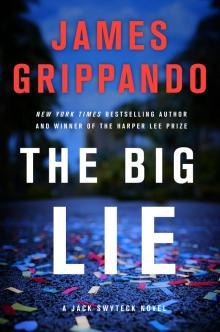
The Big Lie*
The Girl in the Glass Box*
A Death in Live Oak*
Most Dangerous Place*
Gone Again*
Cash Landing
Cane and Abe
Black Horizon*
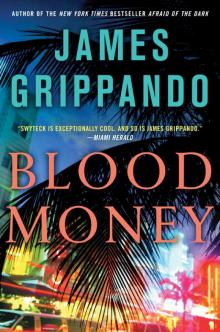
Blood Money*
Need You Now
Afraid of the Dark*
Money to Burn
Intent to Kill
Born to Run*
Last Call*
Lying with Strangers
When Darkness Falls*
Got the Look*
Hear No Evil*
Last to Die*
Beyond Suspicion*
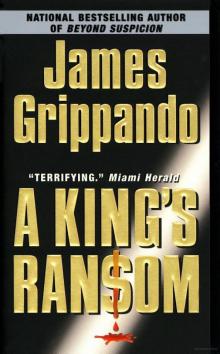
A King’s Ransom
Under Cover of Darkness
Found Money
The Abduction
The Informant
The Pardon*
Other Fiction
The Penny Jumper: A Novella
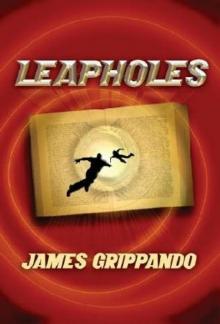
Leapholes: A Novel for Young Adults
Dramatic Plays
With L
Watson
* A Jack Swyteck novel
Copyright
This is a work of fiction. Names, characters, places, and incidents are products of the author’s imagination or are used fictitiously and are not to be construed as real. Any resemblance to actual events, locales, organizations, or persons, living or dead, is entirely coincidental.
code 6. Copyright © 2023 by James Grippando, Inc. All rights reserved under International and Pan-American Copyright Conventions. By payment of the required fees, you have been granted the nonexclusive, nontransferable right to access and read the text of this e-book on-screen. No part of this text may be reproduced, transmitted, downloaded, decompiled, reverse-engineered, or stored in or introduced into any information storage and retrieval system, in any form or by any means, whether electronic or mechanical, now known or hereafter invented, without the express written permission of HarperCollins e-books.
first edition
Cover design by Ervin Serrano
Cover photographs © Stephen Mulcahy/Arcangel Images (woman); © Shutterstock
Library of Congress Cataloging-in-Publication Data has been applied for.
Digital Edition JANUARY 2023 ISBN: 978-0-06-322381-3
Print ISBN: 978-0-06-322378-3
About the Publisher
Australia
HarperCollins Publishers Australia Pty. Ltd.
Level 13, 201 Elizabeth Street
Sydney, NSW 2000, Australia
www.harpercollins.com.au
Canada
HarperCollins Publishers Ltd
Bay Adelaide Centre, East Tower
22 Adelaide Street West, 41st Floor
Toronto, Ontario, M5H 4E3
www.harpercollins.ca
India
HarperCollins India
A 75, Sector 57
Noida
Uttar Pradesh 201 301
www.harpercollins.co.in
New Zealand
HarperCollins Publishers New Zealand
Unit D1, 63 Apollo Drive
Rosedale 0632
Auckland, New Zealand
www.harpercollins.co.nz
United Kingdom
HarperCollins Publishers Ltd.
1 London Bridge Street
London SE1 9GF, UK
www.harpercollins.co.uk
United States
HarperCollins Publishers Inc.
195 Broadway
New York, NY 10007
www.harpercollins.com
James Grippando, Code 6