

Lost without you falling.., p.1
Lost Without You (Falling, For You Book 3), page 1
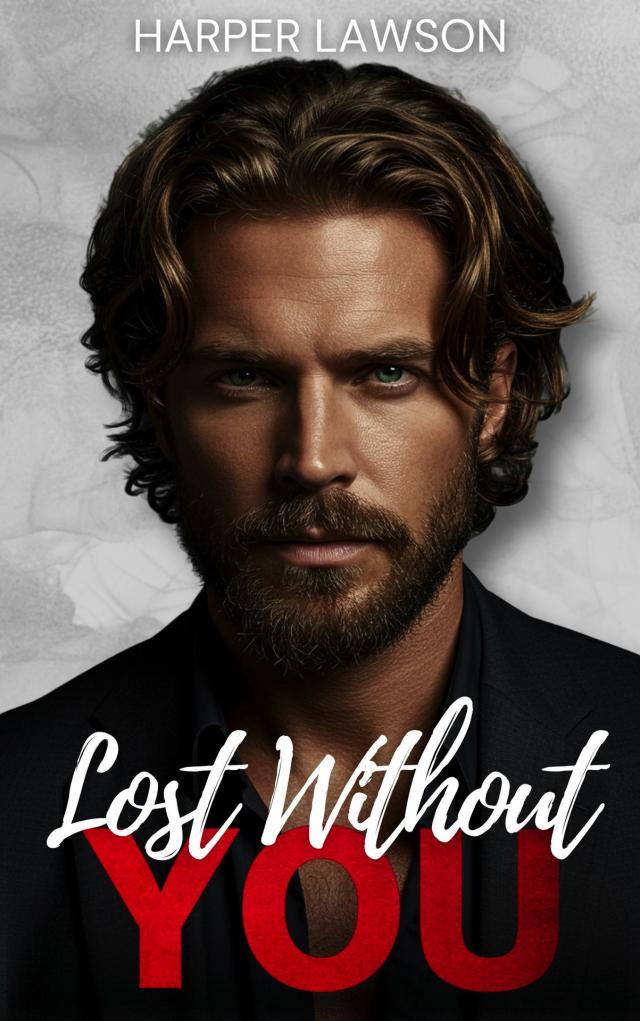


Lost Without You
Falling, For You
Book Three
Harper Lawson
This is a work of fiction. Names, characters, businesses, places, events, and incidents are either the products of the author’s imagination or used in a fictitious manner. Any resemblance to actual persons, living or dead, or events is coincidental.
Copyright © 2026 Harper Lawson
All rights reserved.
No part of this book may be reproduced in any form or by any electronic or mechanical means, including information storage and retrieval systems, without written permission from the author, except for the use of brief quotations in a book review.
Contents
Falling, For You
1. Penelope
2. Patrick
3. Penelope
4. Patrick
5. Penelope
6. Patrick
7. Penelope
8. Patrick
9. Penelope
10. Patrick
11. Penelope
12. Patrick
13. Penelope
14. Patrick
15. Penelope
16. Patrick
17. Penelope
18. Patrick
19. Penelope
20. Patrick
About the Author
Leave a Review
Falling, For You
Reading Order
1. Only You
2. Wild For You
3. Lost Without You
1. Penelope
The thing about dreams coming true is that nobody warns you they come with a side of carpal tunnel and an aching face.
My hand was cramping around the Sharpie, the skin between my thumb and forefinger screaming in that special way that promised ‘you will regret this tomorrow’. My cheeks ached from smiling. My feet, crammed into heels I'd convinced myself were "comfortable enough," had officially filed for divorce from my body. And yet, the happiness was real. Annoyingly, persistently real, like a song stuck in my head that I didn't actually want to stop humming.
"I pre-ordered six copies," the woman in front of me was saying, clutching my book like it contained state secrets. "One for me, my sister, my mom, my three best friends—"
"That's incredibly kind," I said, and meant it. "What's your name?"
"Amara."
I scrawled the dedication with my throbbing hand:
For Amara,
Thank you for believing in second chances.
I added my signature heart flourish. I'd practiced it in notebooks as a teenager, dreaming of exactly this moment.
"Thank you," she breathed, pressing the book to her chest. "Thank you so much."
This. This was the marrow of it. My latest romance novel, A Hundred Second Chances, had sold out its first print run in less than twenty-four hours. The bookstore, a beloved indie spot called The Last Chapter, was packed wall-to-wall with readers holding copies, their faces bright with that particular anticipation I'd never tire of seeing.
My phone buzzed against the signing table. I snuck a glance between readers.
A screenshot from @BookishBex: Just finished. I am a WRECK in the best way. Ugly-cried for two hours straight. Penelope Carter, you have my whole heart.
Another from @HopelessRomantic23: I've never felt so seen. The way you write about rebuilding trust… I'm not okay.
"You're glowing," said Linda, the store manager, appearing at my elbow with a fresh water bottle. "Seriously. Powered by pure serotonin over here."
"I'm powered by adrenaline and the knowledge that my hand may never recover," I joked. "But yes. Also serotonin."
She laughed, adjusting her purple-framed glasses. "Twenty more minutes, then we need to reset for the next signing."
"Who's up next?"
"Elias Thorne." She said it with the reverent hush people reserved for literary fiction authors, the ones who got shortlisted for serious awards and reviewed in publications that would never deign to notice a romance novel. "He just arrived. He's in the back if you want to say hello."
"Of course," I said, because that's what professional authors did. We networked. We congratulated each other. We pretended the literary hierarchy didn't exist while standing firmly on our assigned rungs.
I excused myself from the line of readers waiting for me to sign their books; they had all clearly heard Linda and were waiting to see my reaction. Anything other than greeting Elias immediately would come off as snubbing him.
Finding Elias wasn’t difficult; he was near the philosophy section, accepting a cup of water from a clerk. Tall, gaunt, dressed in the unofficial uniform of Serious Literature: rumpled linen shirt, dark trousers, an expression suggesting he'd just finished contemplating the futility of human existence and found it wanting. His latest novel, a bleak, lyrical exploration of a failing marriage in coastal Maine, had been longlisted for a major prize.
"Mr. Thorne," I said, extending my good hand. "Penelope Carter. Congratulations on the longlist. It's a wonderful book."
I'd read it, actually. Or tried to. Two hundred pages of beautifully crafted sentences, each paragraph more elegantly miserable than the last. I'd given up when the protagonist spent three pages watching rain streak down a window as a metaphor for his emotional unavailability.
His handshake was brief and dry. "Ah, yes. The record-breaker." His eyes flicked to my signing line, still substantial, then back to me with detached, anthropological curiosity. "Thank you. And congratulations to you as well. Quite the... phenomenon."
There it was. That microscopic pause before phenomenon, the tiny ellipsis of disdain that literary fiction authors must practice in the mirror. Phenomenon. Not achievement. Not accomplishment. Phenomenon. Like a weather event. Like a viral video of a cat playing piano. Something that happened to the cultural landscape rather than contributed to it.
"That's very kind," I said. I wasn’t childish enough to mind him.
"I'm sure your readers are very..." He took a sip of water, searching. "Devoted."
They are, I wanted to say. They feel things deeply, which is more than I can say for the seventeen people who'll actually finish your gorgeous slog of a book. But I just smiled my professional smile.
"They're the best. Enjoy your evening."
I walked back to my table, his polite condescension clinging to me like smoke. The next reader in line was a woman in her fifties, wearing a cheerful floral dress and an eager expression that immediately made me brace for impact.
"I just have to tell you," she gushed as I took her book, "I don't usually read romance."
Here it comes, I thought.
"I'm more of a literary fiction person, you know? Biographies, historical novels, that sort of thing." She leaned in conspiratorially. "But my book club picked yours, and I have to say, it's actually good!"
Actually... I’d built a patience for this already, but it still got on my nerves slightly. Actually good, as in: against all expectations, despite the genre, in defiance of the inherent worthlessness of love stories—
But looking at Margaret's face, I could see she meant it as pure praise. She wasn't Elias Thorne. She'd taken a chance on something outside her usual reading, and it had moved her. My irritation wasn't really with her. It was with a world that had taught her to be surprised in the first place.
"I'm so glad you enjoyed it," I said, and found I meant it more than I'd expected. "What's your name?"
"Margaret."
I signed her book with a flourish that felt mechanical. For Margaret, thank you for taking a chance.
"You know, you could write something serious," she added, clearly believing this was a compliment. "You've got real talent. You shouldn't limit yourself."
Limit myself. As if writing about love, the most universal, terrifying, transcendent human experience, was somehow less than writing about a man staring at rain for three pages.
"That's very kind," I said. "Thank you for stepping outside your comfort zone."
She looked pleased with herself, as if she'd performed community service by reading my book. "Oh, it was my pleasure!"
The rest of the signing passed in a blur. An elderly man bought a copy for his wife, their fiftieth anniversary was next week. A college student told me my last book got her through a brutal finals season. More readers, more genuine warmth, more moments of connection that should have filled me.
But Elias Thorne's pause kept replaying. Margaret's ‘actually’ kept needling.
And underneath both, an older fear whispered: What if they're right to dismiss you? What if your books are optimistic because your life has been optimistic? I thought about my childhood, comfortable and secure. Parents with good jobs. Trips to Italy and France during school holidays. A car for my eighteenth birthday. A trust fund that meant I'd graduated debt-free. What do you actually know about the resilience you write about?
By the time Linda announced we were wrapping up, I was running on fumes. I waved to the remaining readers with genuine regret, promised to return soon, and escaped to the back office.
In the quiet, I leaned against a filing cabinet and let out a long breath.
"Rough finish?" Linda appeared in the doorway, sympathetic.
"No, it was wonderful," I said, and meant it. "Just... a lot."
"The Elias Thorne interaction?" She winced knowingly. "I saw your face when you came back. He's like that with everyone, if it helps."
&nb sp; "It does, actually. A little."
"The literary fiction crowd." She shrugged. "Allergic to happy endings. You threaten them by proving people actually want to feel good."
I laughed despite myself. "Maybe."
"Drive safe, Penelope. And hey—" She caught my arm. "Your books matter. Don't let anyone make you forget that."
I nodded, not trusting my voice.
The drive should have taken me home. Instead, I pointed my car toward the outskirts of the city, toward Willow Creek Memory Care. The need to see my mother was a physical pull, an anchor I reached for when everything else felt unsteady.
The facility was nice, the nicest I could afford. Soft lighting, calm colors, lavender air fresheners working overtime to mask sharper, clinical scents. After Dad passed five years ago, I'd promised Mom I'd always take care of her. This place was very expensive, but I could afford it now. That, at least, felt like something solid.
"She's in the sunroom," Chloe, the head nurse, told me at the front desk. "Good day today. Peaceful."
"Thanks, Chloe."
I found her in a wingback chair by the large window, watching evening light gild the courtyard maple. A faded afghan lay across her lap, one she'd crocheted during her pregnancy with me and rescued from our old living room. At seventy-one, she looked both older and strangely younger in her vulnerability, her once-vibrant dark hair now cloud-white.
"Hi, Mom."
She turned slowly. For one breathtaking moment, recognition flickered in her warm brown eyes… eyes that were exactly like mine. Then it clouded, replaced by polite, welcoming confusion.
"Hello, dear." She patted the seat beside her. "Come sit. Such a lovely evening."
"It really is." I took her hand. Cool, papery, dotted with age spots. "How are you feeling?"
"Oh, tired. You know how it is." She studied my face, frowning slightly. "You look exhausted, sweetheart. Are you eating enough? You young people and your dieting. You need your strength for exams."
Exams. I was thirty-two. I hadn't taken an exam in over a decade.
"I'm eating fine, Mom." I swallowed. "I had a big event today. For my book. See?" I pulled a copy from my bag, placing it in her lap.
She turned it over with detached curiosity, like examining an interesting seashell. Her fingers traced the embossed lettering.
"Penelope Carter," she read slowly. Then she looked up, smiling apologetically. "That's a lovely name. Same as my daughter's."
The air vanished from my lungs.
"Is it?" I managed.
"Mm-hmm. She wants to be a writer, you know." Her eyes drifted toward the window. "Always has her nose in a book, that one. Making up stories."
"She sounds wonderful."
"She is. But I worry." Mom shook her head. "I tell her, 'Penny, you need to focus on practical things too.' Writing... It's not a real full-time job, is it?"
Her worries pierced deeper than Elias Thorne's disdain ever could. This was an old argument, one we'd had when I'd declared my major. She'd come around eventually, become my biggest champion. But that fear for my security, that pragmatic love, was what remained in the labyrinth of her fading mind.
"I think it can be," I said thickly. "If you work hard enough."
"She works hard." Mom nodded firmly, setting my book aside on the end table. Already forgotten. "But the world is harder. I just want her safe."
Her gaze sharpened suddenly, focusing on me with startling clarity. "You're too young for such sad eyes. Is it a boy? Did some boy hurt you?"
A soft laugh escaped me. "No, Mom. No boy."
"Good. Most of them aren't worth the trouble." She leaned back, the clarity already fading. "Orlando, now… he's worth it. Working late again, I suppose. Tell him he needs to be home for dinner. Penny has her ballet recital next week."
My father had been dead for five years. My last ballet recital was twenty years ago.
"I'll tell him," I whispered, the promise aching in my throat. "I'll remind him about the recital."
"Good girl." She patted my knee, her touch feather-light. "You're a good friend to her, you know. Looking out for her like this."
I couldn't speak. I just held her hand while the courtyard lights flickered on automatically, marking the shift from dusk to dark. Her breathing deepened, her head nodding against the chair. I waited until she was fully asleep, her features softening into peace, before extracting my hand, kissing her forehead, and gathering my things.
"Same time Thursday?" Chloe asked as I signed out.
"Same time Thursday."
The drive home was silent. No music, no podcasts. Just the hum of the engine and the weight of loving someone who no longer remembered being loved by me.
My apartment felt hollow when I walked in. I dropped my bag by the door, letting copies of my book spill across the hardwood. On my desk, a thick envelope waited, a tangible anchor in the emotional drift of the evening.
The closing documents for Pinecrest Cabin.
I sat down, running my fingers over the legal paper. That cabin near Lake Tahoe, where Mom and I had spent two glorious weeks every summer until I was sixteen. Where she'd taught me to identify wildflowers: lupine, Indian paintbrush, mountain heather. Where we'd hiked to secret meadows, read paperback novels on the porch swing, and watched deer pick their way through the morning mist.
The memories felt distant now, softened by time. Mom, the Mom who remembered those summers, had been slipping away. But in that cabin, sitting on the porch with the mountains turning gold at sunset, she used to tell me stories about meeting him. About heartbreak. About choosing love even when it terrified you.
"Love isn't just a feeling, Penny," she used to say. "It's a choice you make every single day. Even when it's hard. Especially when it's hard."
That cabin was where I'd learned that love wasn't something that happened to you, it was something you built, brick by stubborn brick. It was the bedrock of every story I'd ever written.
I uncapped my pen and began to sign. Each stroke felt like reclamation. Like defiance.
The trust fund didn't write my books. The European holidays didn't create the emotions that made readers ugly-cry at two in the morning. She did. The memory of her strength after Dad died. Her choice to keep believing, keep hoping, keep showing up, even when the grief threatened to swallow her whole. That was my authenticity.
I signed the last page with a decisive flourish. It was done.
I was keeping our special place in the family. Keeping the promise I'd made, even if she no longer remembered asking for it.
I set down the pen and sat back in my chair. The apartment was quiet. Through the window, city lights glittered against the dark; beautiful, distant, and indifferent. I looked at the signed documents, then at the book lying forgotten on my floor, its glossy cover catching the lamplight.
A bestselling author who felt like a fraud. A devoted daughter who'd become a stranger. A woman who'd just bought a piece of her own heart and had no one to share the victory with.
My phone buzzed.
Another review notification.
Another person telling me how much my words mattered to them, or criticizing how unrealistic they were.
I didn't look at it.
Instead, I sat in silence, holding the space between the person the world saw and the person I actually was. The gap felt wider tonight than it ever had. I thought about Mom setting my book aside without a flicker of recognition. About Elias Thorne's careful pause. About Margaret's well-meaning ‘actually’.
Somewhere out there, millions of readers loved my work. But in this quiet apartment, surrounded by evidence of my success, I had never felt more alone in it.
I wondered, not for the first time, if the love I wrote about so convincingly was something I'd ever actually find for myself.
The thought followed me to bed, curled beside me in the dark, and stayed there. Unanswered, until sleep finally came.
2. Patrick
The question that would ruin my week came from a kid in the back row wearing a hoodie that cost more than my first month's rent.
I didn't know that yet, of course. At that moment, the lecture was going well… better than well if I’m being honest. Twenty-three graduate students in Advanced Narrative Theory hung on my every word, their pens scratching furiously whenever I dropped something quotable. I was discussing Carver's use of omission, a topic I could navigate blindfolded.






